
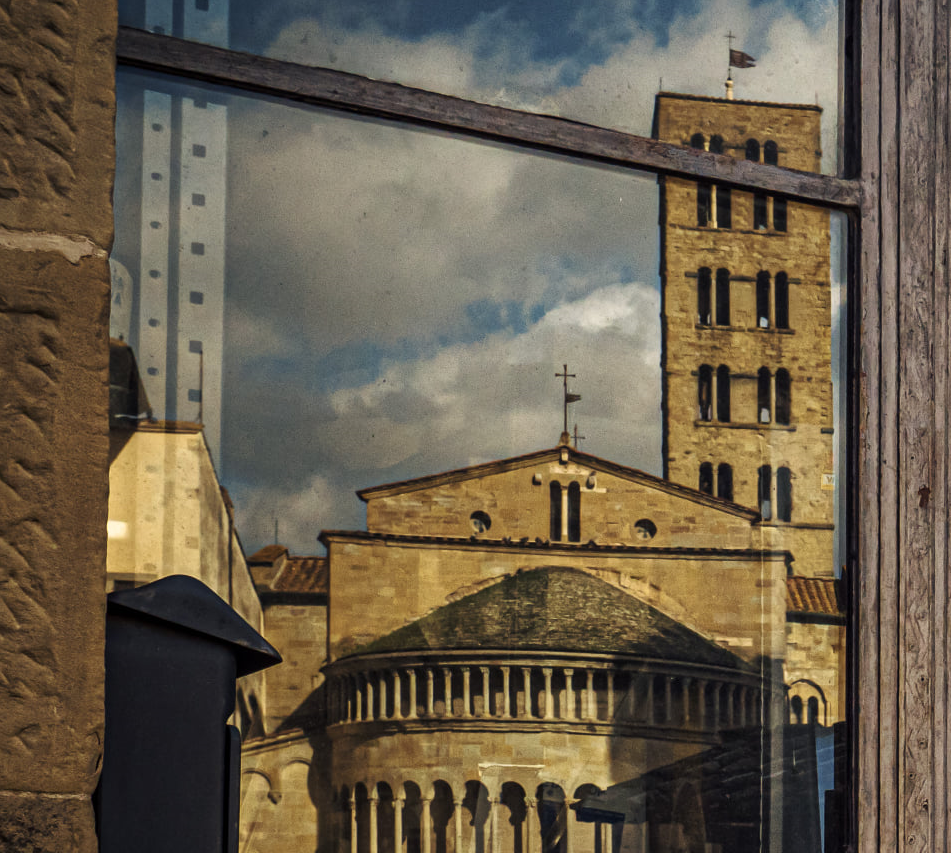
Santa Maria della Pieve: one of the most fascinating treasures in Arezzo’s historic center
In the vibrant heart of Arezzo stands Santa Maria della Pieve, one of the most precious and recognizable Romanesque churches in Tuscany. Its loggia façade, the renowned “hundred holes” bell tower, and the extraordinary masterpieces preserved inside make it an essential stop for anyone wishing to discover the most authentic soul of the city. Walking through the medieval streets that lead to the Pieve, you immediately feel the historical and artistic richness this place holds: centuries of transformation, architectural styles that meet and overlap, and a cultural heritage that continues to captivate visitors from around the world.

The Historical Charm of Santa Maria della Pieve
The Pieve of Santa Maria in Arezzo is one of the masterpieces of Tuscan Romanesque architecture, located in the heart of the historic center. Its origins date back to the 5th–6th century AD, when a sacred building already stood on the site—evidence of the deep spirituality and importance of the city. Over the centuries, the Pieve underwent numerous architectural transformations, evolving into the imposing structure we admire today.
Its characteristic loggia façade, added in the 12th century, and its slender bell tower—known as the “hundred holes tower”—tell stories of faith, art, and tradition. Every detail of Santa Maria della Pieve, from the sculpted columns to the refined capitals, reflects the historical and cultural evolution of Arezzo, making it an unmissable stop for anyone wishing to immerse themselves in the charm and history of this beautiful Tuscan city.
Architecture Between Romanesque and Gothic
Santa Maria della Pieve in Arezzo stands out for its extraordinary beauty and architectural complexity, perfectly embodying the transition from the Romanesque to the Gothic style. This harmonious balance is especially evident in its captivating façade, a masterpiece that combines elements of both styles, making it unique in the Italian architectural landscape.
Renovated in the 13th century, the façade is characterized by four superimposed orders of loggias—an eye-catching detail for any visitor. Each order consists of a series of columns that become progressively closer together as they rise, creating a dynamic and striking visual effect. This interplay of symmetry and proportion, combined with the richness of sculptural detail, makes the Pieve a timeless work capable of narrating centuries of history and attracting admirers from all over the world.
The Romanesque Façade of Santa Maria della Pieve: Harmony, Symbolism, and Mastery
The Romanesque façade of Santa Maria della Pieve is one of the most fascinating and recognizable in all of Tuscany—a masterpiece that blends elegance with symbolic complexity. Built in the 12th century, it immediately stands out for its iconic four-tiered loggia, each level composed of columns entirely different from one another. This is no coincidence: it reflects the variety, richness, and vitality of the medieval world. Each uniquely carved column seems to tell its own story, contributing to a visual effect that is both harmonious and wonderfully surprising.
The façade was conceived as a sort of monumental “gateway” to the city center—a symbolic architectural landmark celebrating the spirituality and prestige of the community. The interplay of solids and voids, the alternating arches and loggias, and the perfect symmetry make the building an extraordinary example of Romanesque mastery that continues to enchant visitors today.
The Bell Tower of Santa Maria della Pieve
Next to Santa Maria della Pieve rises its famous bell tower, an imposing sandstone structure dominating the cityscape. Construction began in 1216 and finished in 1330, resulting in one of the city’s most recognizable symbols. Known as the “hundred holes tower” for the numerous openings punctuating its surface, the name is curious, as the actual number of openings is 80.
Standing about 50 meters high, the bell tower is divided into five levels, each enriched with elegant windows that add lightness to the solid stone structure. This architectural masterpiece not only complements the Pieve but also reveals the skill and ingenuity of medieval artisans, establishing itself as an iconic landmark for locals and visitors strolling through Arezzo’s historic streets.
The “Hundred Holes” Bell Tower: An Icon of Arezzo
Beside the Pieve stands the famous bell tower known as the “hundred holes tower,” one of the most recognizable elements of Arezzo’s skyline. Built between 1216 and 1330 from sandstone, the tower owes its nickname to the numerous openings arranged across its surface: in reality, they number eighty, arranged in elegant twin windows across five levels. Nonetheless, the rhythmic repetition of these openings led over time to the rounded number “one hundred.”
With its fifty meters of height, the bell tower dominates the surrounding streets and piazza, offering a majestic sight from every angle. Its slender verticality harmonizes perfectly with the Romanesque façade of the Pieve, creating one of the most evocative architectural compositions in the city. Whether viewed from Corso Italia or admired at sunset, the tower reveals its full evocative power, becoming an essential point of reference for anyone visiting Arezzo.
Santa Maria della Pieve: A Triumph of Art and History
Once inside, the Pieve offers an experience of artistic and historical wonder. The raised presbytery, the columns, the baptismal font, and the 14th-century frescoes all contribute to a sacred and unique atmosphere. The naves, the crypt, and the main altar are enriched by masterpieces from artists such as Pietro Lorenzetti, Parri di Spinello, and Bernardo Rossellino. This blend of art and spirituality makes a visit to Santa Maria della Pieve truly unforgettable.

Staying at Cento Passi dal Duomo: the Pieve and the heart of Arezzo within reach
Visiting Santa Maria della Pieve means stepping into one of the most fascinating and historically rich places in Arezzo. To fully experience the atmosphere of the historic center, B&B Cento Passi dal Duomo is the perfect choice: located in the heart of the city, less than a two-minute walk from the Pieve, it allows you to explore Arezzo with unmatched comfort and freedom. The medieval streets surrounding the B&B lead directly to the Romanesque church, creating a suggestive path that prepares you for the beauty of the loggia façade, the bell tower, and the art-filled interior.
Staying at Cento Passi dal Duomo allows you to visit the Pieve at the most magical times of day, whether enjoying the peaceful morning light or the warm glow of late afternoon, when the square becomes lively and the church reveals new nuances. It is the ideal solution for those who wish to explore the historic center at a relaxed pace, savoring architectural details and timeless atmospheres.
To enjoy an authentic stay in the heart of Arezzo, we invite you to book a room at B&B Cento Passi dal Duomo: it will be the perfect starting point to discover the Pieve and all the wonders that surround it.